

About 120 to 140 years ago, many American cities and towns had “Sporting Districts”. These “Sporting Districts” were synonymous with “Red Light Districts” and “Arts Districts” and other euphemisms to set apart what was desirable in society from those who were deemed undesirable – gambling houses, dance halls, brothels, opium dens, seedy saloons, ethnic groups, and the poor.
Formerly established by the city council in 1889, one of the largest of these districts in the nation was in San Antonio. It was so large that a tourist guide, called the Blue Book, was published for nearly a quarter of a century. If your first thoughts are that the area consisted of run down barrios, you’d be mistaken, many of the buildings were very elegant and modern for their time. An interesting piece of trivia is that the very first place to have electricity in San Antonio was the Vaudeville Theater and Saloon in 1882.
The Miniatures
I finally finished painting the miniatures from the Scarlet Ladies Bystanders Pack found in Knuckleduster’s Gunfighter’s Ball range. Previously I had painted the lady in the bathtub, Helen Highwater, and Squirrel Tooth Alice. In addition, the pack contains Fannie Porter, Etta Frank, Belle Ringer, and Dance Hall Gal in Cowboy’s Lap.
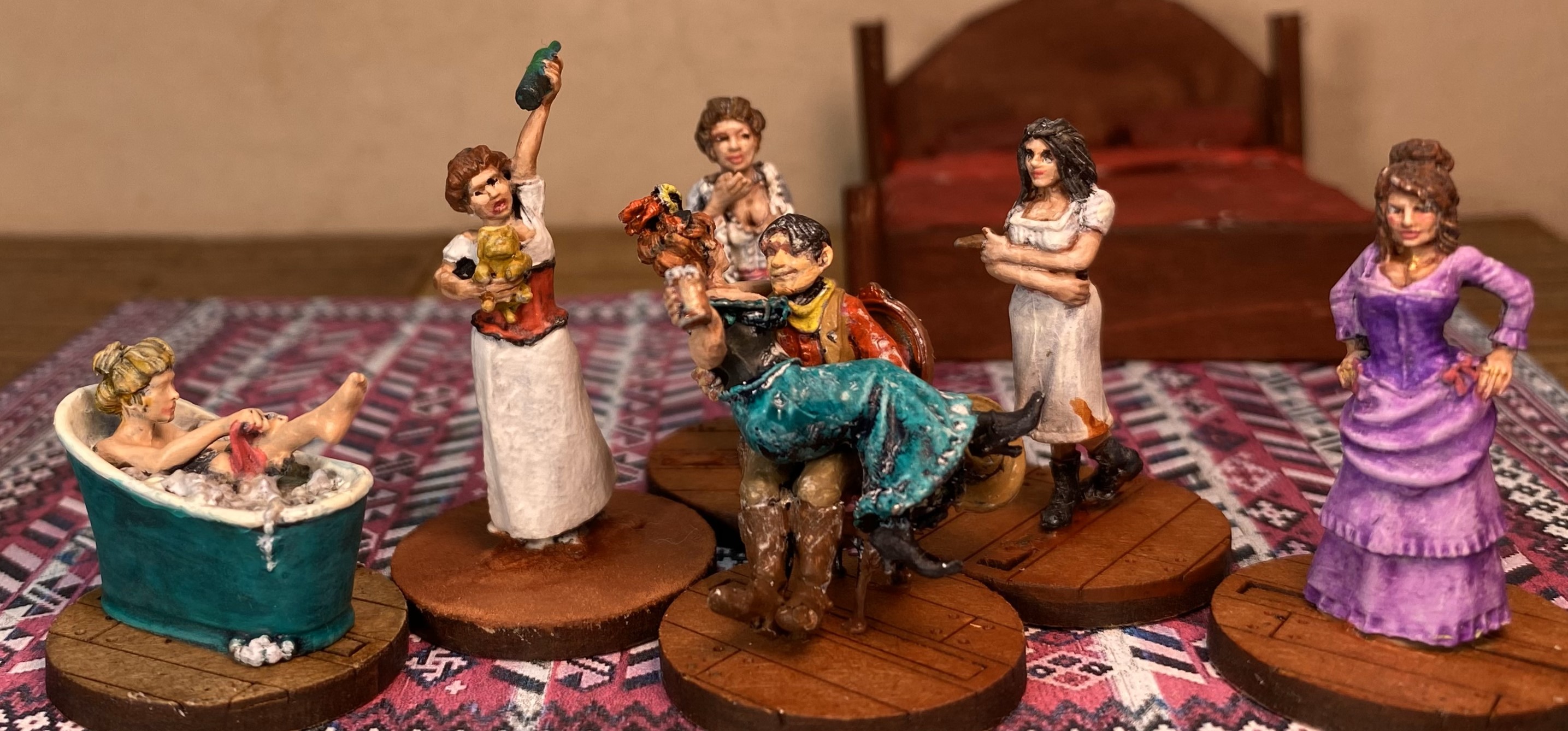
Fannie Porter
On the edge of the district, the corner of Durango and San Saba, was a two-story building, Fannie Porter’s Boarding House. A prominent establishment visited by lawmen and outlaws alike and from 1895 to 1901 a favorite watering hole for the Wild Bunch, a.k.a. the Hole-in-the-Wall Gang. According to legend, it was the unpaved street in front of her house where Butch Cassidy rode a bicycle while the Sundance Kid called on Etta Place. It was such a classy joint with plush carpets, lace curtains, brass spittoons, fine crystal, and silk sheets that gentlemen were required to remove their spurs to keep from damaging the linens and furniture. Chilled champagne was available for special clientele.

Fannie Porter was an immigrant (don’t worry, she was from one of those “white” countries Republicans approve of). Fannie was only a year old when her family emigrated from England in 1874.
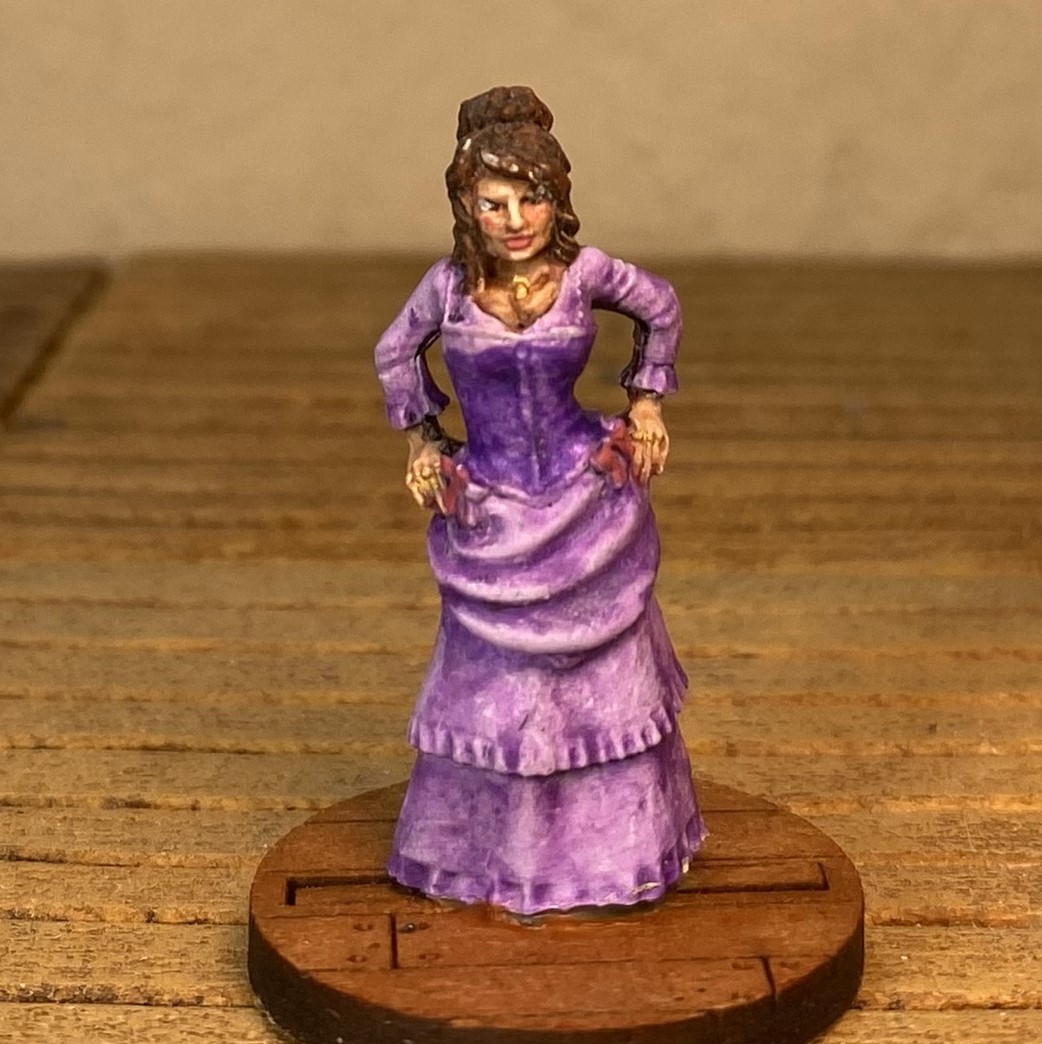
I couldn’t find any information on what happened to her family or of her early childhood, but by age 15 she was working as a prostitute and became the madam of a brothel by age 19. Accounts say she was a “burnished brunette” with a pink complexion who liked to wear elegant, brocaded gowns.
She was not a “kiss and tell” woman, while other women sold the information in their black books, Fannie kept the identities of her clientele secret. Thus, she was trusted by outlaws and lawmen alike. Among her more famous clients were the members of the Wild Bunch on one side of the law and William Pinkerton of the Pinkerton National Detective Agency on the other.
The man who held the lease on her building forced Fannie out in 1901, so she began to operate perhaps the first “call service” in Texas from her home. Utilizing a network of runners, delivery drivers, telegrams, and later a new invention, the telephone, she matched her girls to the client’s desires.

Like many of the infamous soiled doves of the Old West, she faded into history, some say she retired a wealthy woman, some say she married a wealthy man, others that she returned to England, and there’s the story she died in an automobile accident on the streets of El Paso sometime around 1940.
The Miniature
The sculptor didn’t use any photographs of Fannie Porter in sculpting the figure. Instead, he sculpted a soiled dove and gave her the name Fannie Porter. He uses the same dress design on several dance hall/saloon girl minis. The closing decades of the 19th century and the opening decades of the 20th century saw an explosion of color in new colorfast dyes, so I chose to paint her dress purple as the color purple was no longer just for the wealthiest people.

Etta Place
Etta Place is another infamous soiled dove we know little about outside of her companionship with Robert Parker, a.k.a. Butch Cassidy, and Harry Longabaugh, a.k.a. the Sundance Kid.
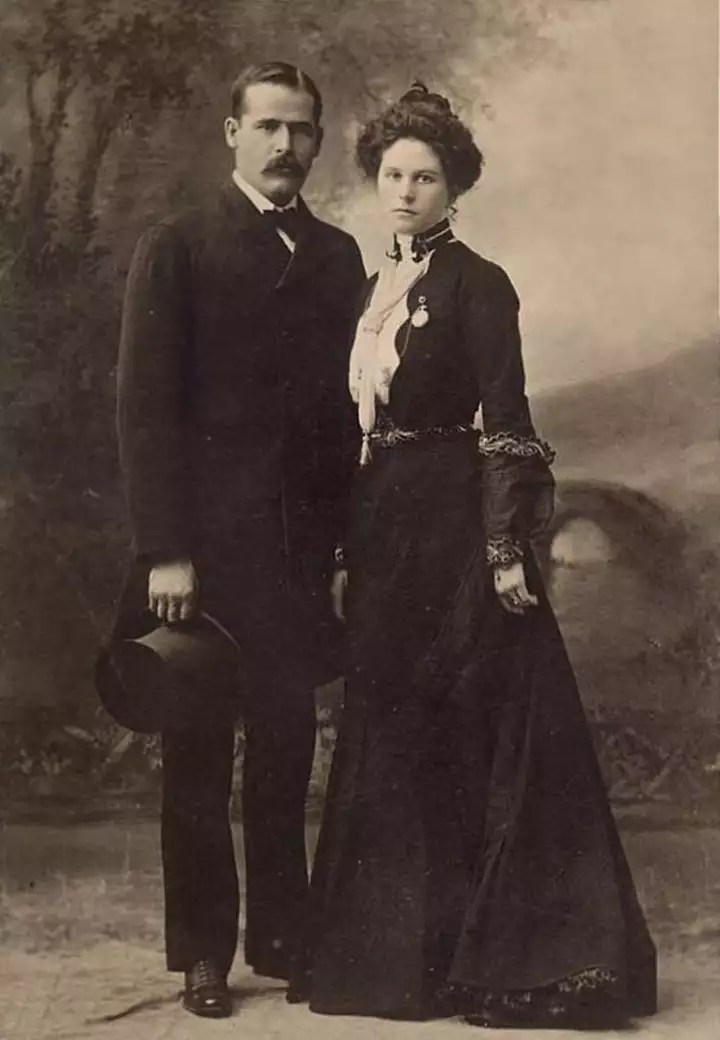
There are conflicting accounts as to her real identity, some say she was Ethel Bishop, a music teacher turned prostitute in San Antonio, some say she was the cattle rustler, Anne Bassett, who ran with the Wild Bunch at the turn of the century, and there is the theory she may have been Eunice Gray, a madam in Fort Worth, who went to South America at about the same time Etta.
The Pinkerton Detective Agency described her in 1906 as a woman of “classic good looks, 27 or 28 years old, 5’4″ to 5’5″ [163–165 cm] in height, weighing between 110 and 115 lb [50 and 52 kg], with a medium build and brown hair.”

There are also numerous theories as to what happened to her after the deaths of Butch and Sundance in South America. There are stories she returned to the United States before Butch and Sundance met their demise and stories, she returned to San Francisco soon after their deaths. There are even stories that she never left South America, that she moved to Argentina or Paraguay. Some place her later life in Texas, Oregon, Colorado, California, or New York. Rumors of her death span the early 1920s to 1966.
Bottom line is that like a lot of legends from the Old West, she just vanished.
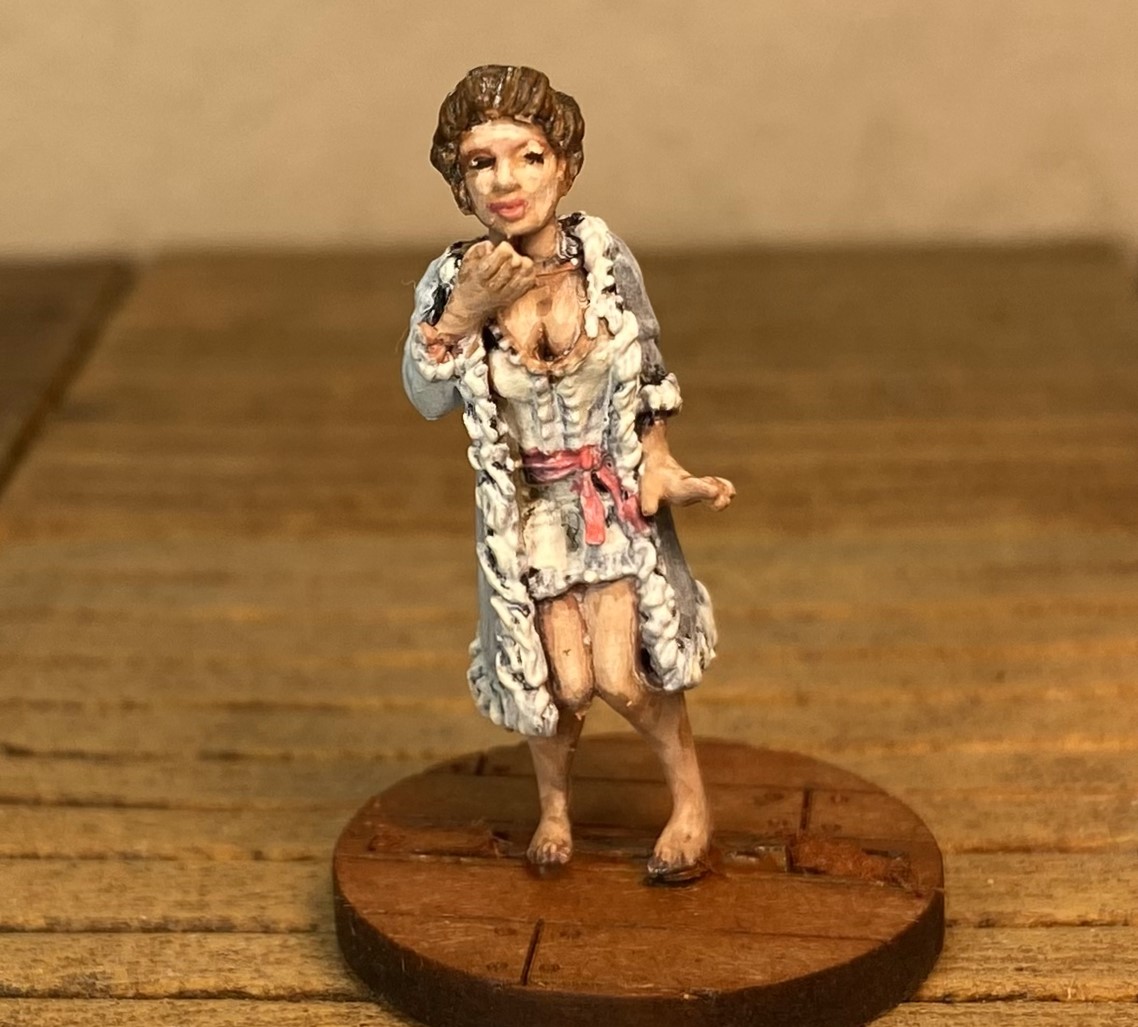
The Miniature
The Knuckleduster miniature labeled “Etta Frank” could be used to represent Etta Place during her early years in San Antonio with Fannie Porter.

Belle Ringer
The miniature labeled as “Belle Ringer” could be used to represent any of the many soiled doves who worked in the “cribs” behind saloons and gentlemen’s clubs. These ladies often lived short hard lives unless they managed to find a way out of the “crib”.
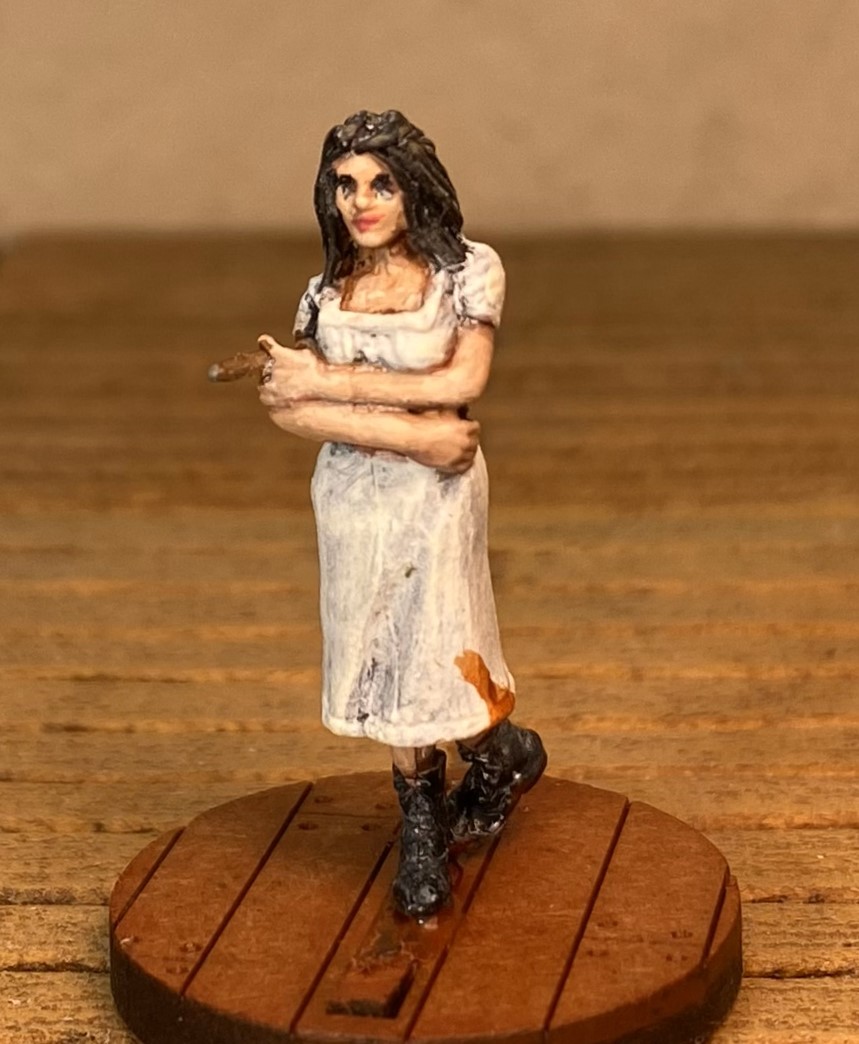

Dance Hall Gal in Cowboy’s Lap
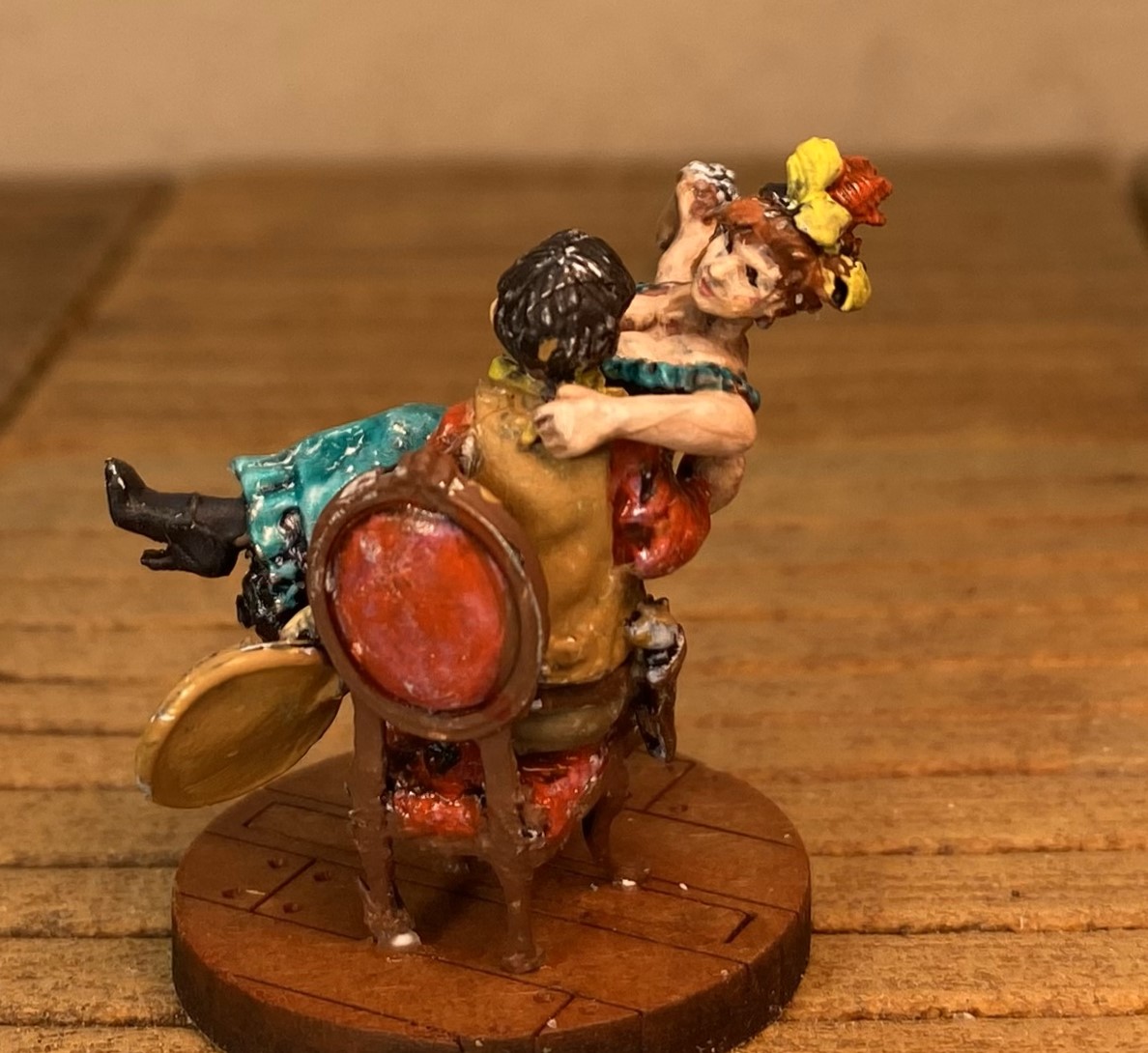
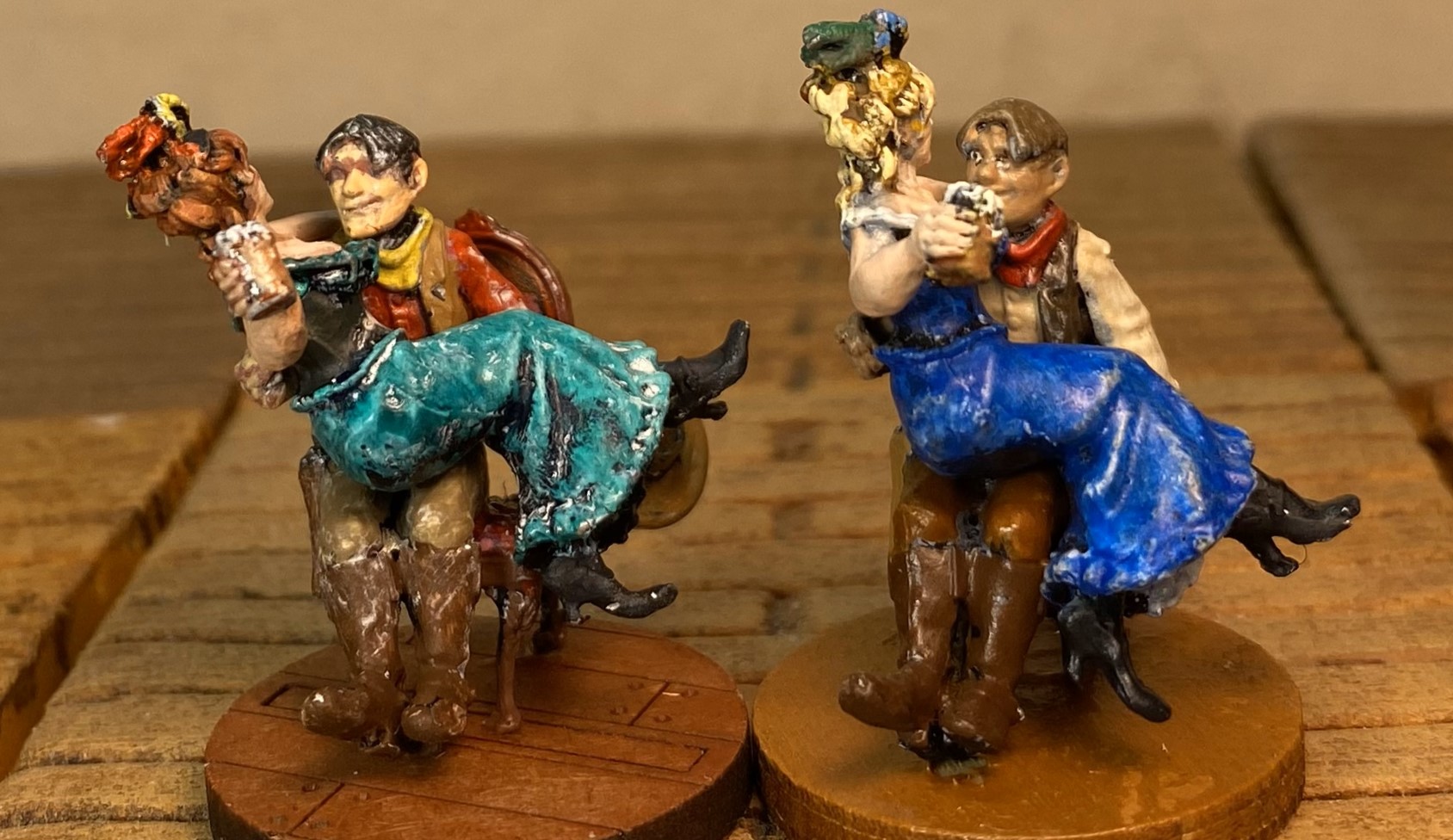
The last figure in the Scarlet Ladies pack is a dance hall girl in a cowboy’s lap. You can buy all of the figures in the pack individually but are a little cheaper if you buy the pack. I mention this because I bought this figure before the pack came out and it is slightly different from the figure in the pack. The figure in the pack is seated on an oval chair like you would find in a home, while the individual figure is seated on a chair you would find in a saloon.


The End of the Sporting District
It took an army general of a nearby base to finally get San Antonio to end its Sporting District, thereby sending the city’s vice underground. In July 1941, President Franklin D. Roosevelt signed into law a ban on prostitution near naval and army bases. The army chief of staff at Ft. Sam Houston at the time, General Dwight D. Eisenhower, brought pressure on San Antonio to comply with the law. Fannie Porter’s boarding house was eventually bought by the Catholic Church as a convent and then as a boy’s home.
Summary
With the completion of these 5 figures, I’ve painted 210 figures in 2924.
- 14 – 28mm Science Fiction figures
- 17 – 28mm Modern Horror figures
- 8 – 28mm Interwar Pulp figures
- 5 – 28mm Old West figures
- 84 – 10mm Seven Years War figures
- 49 – 28mm Medieval figures
- 24 – 28mm Amazon figures
- 9 – 28mm Fantasy figures
So, do you have any soiled doves for use in your Old West games such as Six Gun Sound, Gunfighter’s Ball or Dead Man’s Hand? Let me know. Your comments and suggestions are always appreciated.

Oh, I almost forgot, a vote against Trump and other authoritarians is a vote for democracy.
 Atomic Floozy Adventures
Comments
3 responses to “Fannie Porter and the Sporting Girls”
Love the miniatures, their stories, the history lesson and the final sentiment. I’m voting pro-democracy, anti-MAGA all the way (been doing so since 2015, actually).
So much to like: the history, the voting and reminder that sex-work is real work. What an amazing hobby we are involved in.
Interesting stories about the San Antonio “sporting district.” Up here in the Old Colorado City district of Colorado Springs, we had respectable businesses on one side of the road, and rather less respectable places on the other side. So, you could tell who was behaving themselves and who wasn’t by which side of the street they frequented. Or you could have if somebody hadn’t made tunnels under the street so you could slip across to the less respectable side without being seen.